Project: Urbanideas
Project location: Rivne, Ukraine
Design year: 2026
Project status: competition, third prize winner
Project location: Rivne, Ukraine
Design year: 2026
Project status: competition, third prize winner
Organizer: Contest | contest.com.ua
Client: Center for Urban History | www.lvivcenter.org, PPV Agency | https://www.ppv.net.ua/en
Client: Center for Urban History | www.lvivcenter.org, PPV Agency | https://www.ppv.net.ua/en
Project Concept
The project envisions the creation of a memorial park on the site of the former Jewish cemetery, integrating remembrance, quiet contemplation, and passive recreation. The concept is founded on minimal intervention within the existing landscape, preserving the spirit of the place while creating a setting for personal reflection and commemoration. The park is conceived as a sequence of spaces distinguished by their meaning, informational and emotional intensity, and relationship to the natural environment—from the memorial Space of Silence to tranquil landscape areas intended for walking and contemplation.
Interpretation of the Historical and Memorial Context
The site is understood primarily as a place of burial and remembrance rather than a conventional urban park. The spatial framework reinforces the historic boundaries of the cemetery, preserves the surviving matzevot, and establishes a memorial route that guides visitors through both space and time. Architectural interventions adopt a restrained, minimalist language that integrates seamlessly with the site's historical and memorial significance while respecting its natural landscape.
Key Spatial Planning Strategies
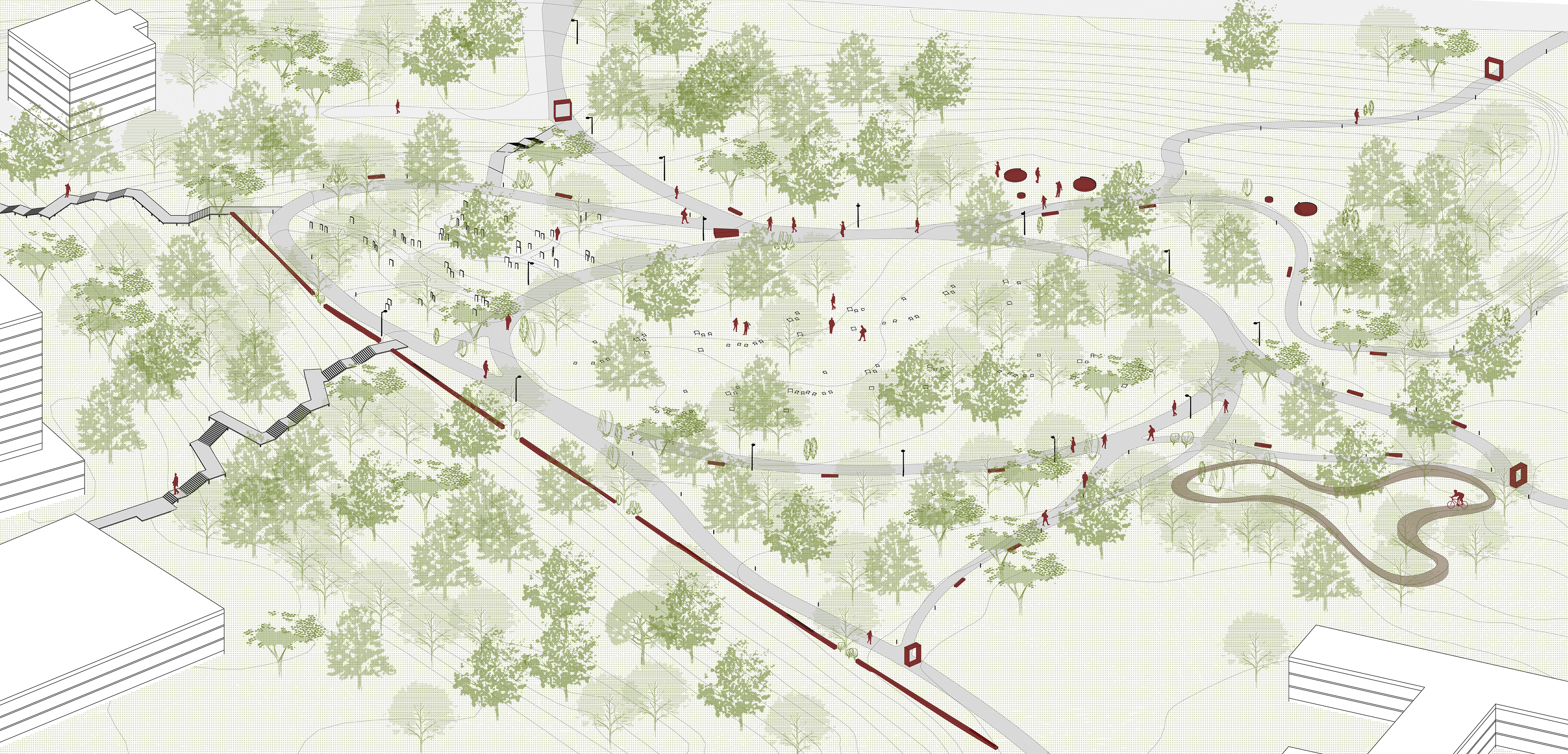
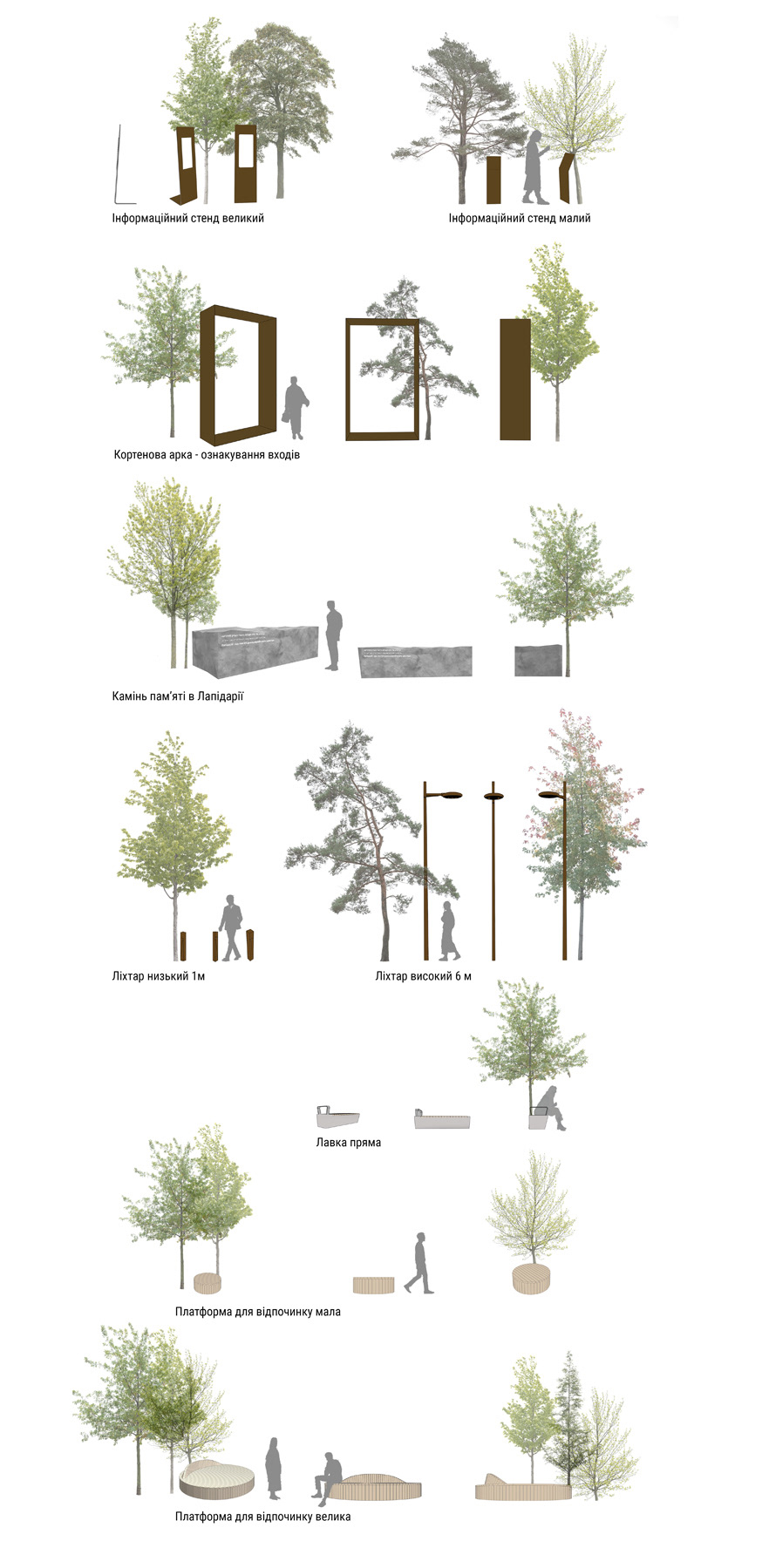
The main entrances are articulated by slender 10 mm corten steel arches, whose minimal profile establishes a subtle landmark within the landscape. They clearly define the points of entry without competing with the park's natural character, maintaining a restrained architectural presence that remains fully integrated with the surrounding environment. Its intimate scale encourages visitors to enter individually rather than as a crowd, creating a moment of separation, introspection, and personal engagement before entering the memorial landscape. All four entrances are fully accessible and barrier-free.
The main promenade guides visitors around the Space of Silence without inviting passage through it, allowing the burial ground to remain undisturbed. The absence of a direct route across this central memorial area reinforces its contemplative character. At the same time, the promenade forms the boundary between two distinct landscape zones—the Non-Intervention Zone and the Park Recreation Zone—allowing visitors to experience the memorial space from its edge while preserving its integrity.
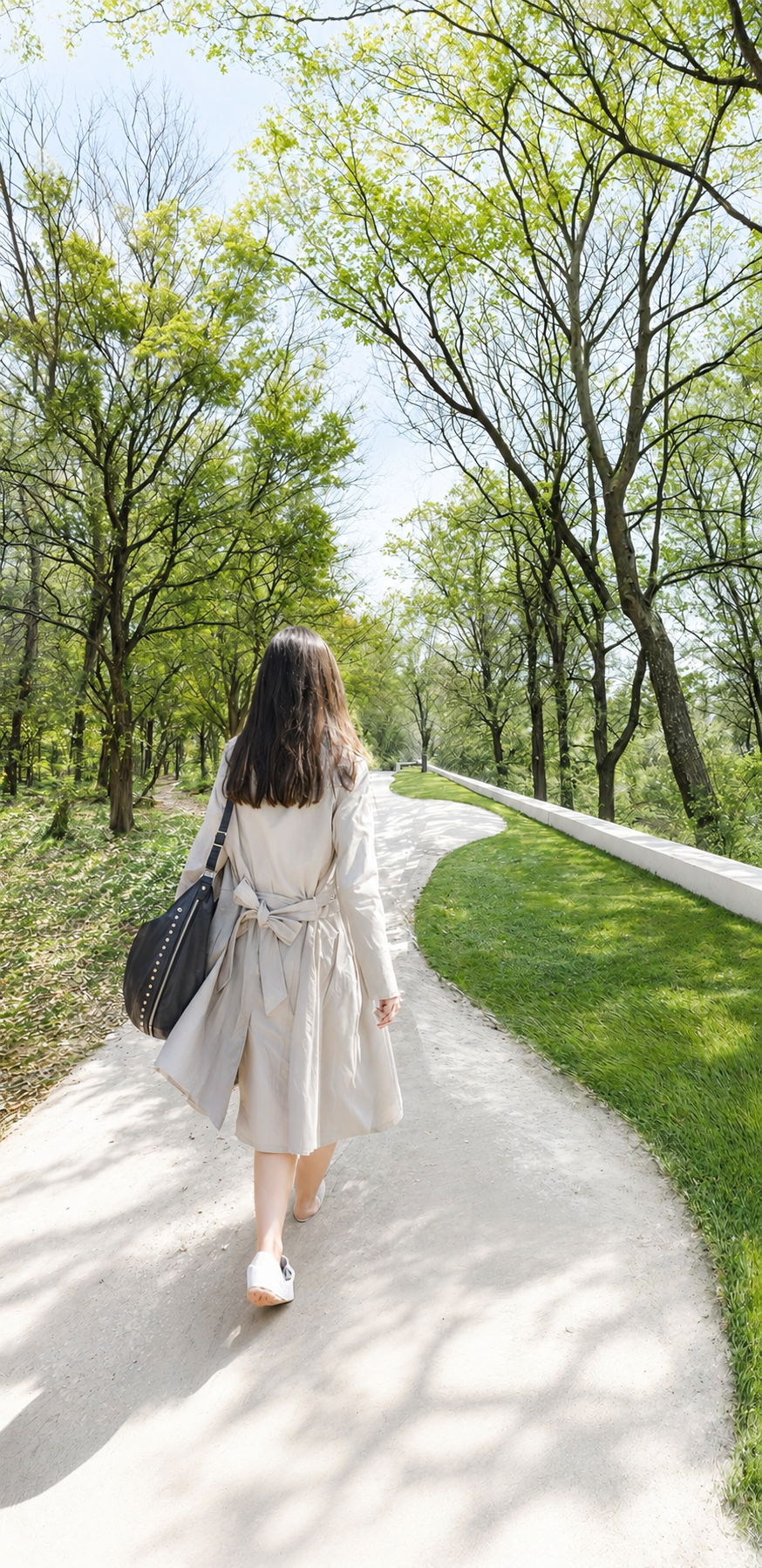
Along the historic boundary of the former Jewish cemetery, which remains legible within the contemporary landscape, a low white concrete wall integrated with seating traces the original perimeter. This element commemorates the historic boundary while offering a place for rest, contemplation, and reflection.
Lapidarium – Garden of Memory
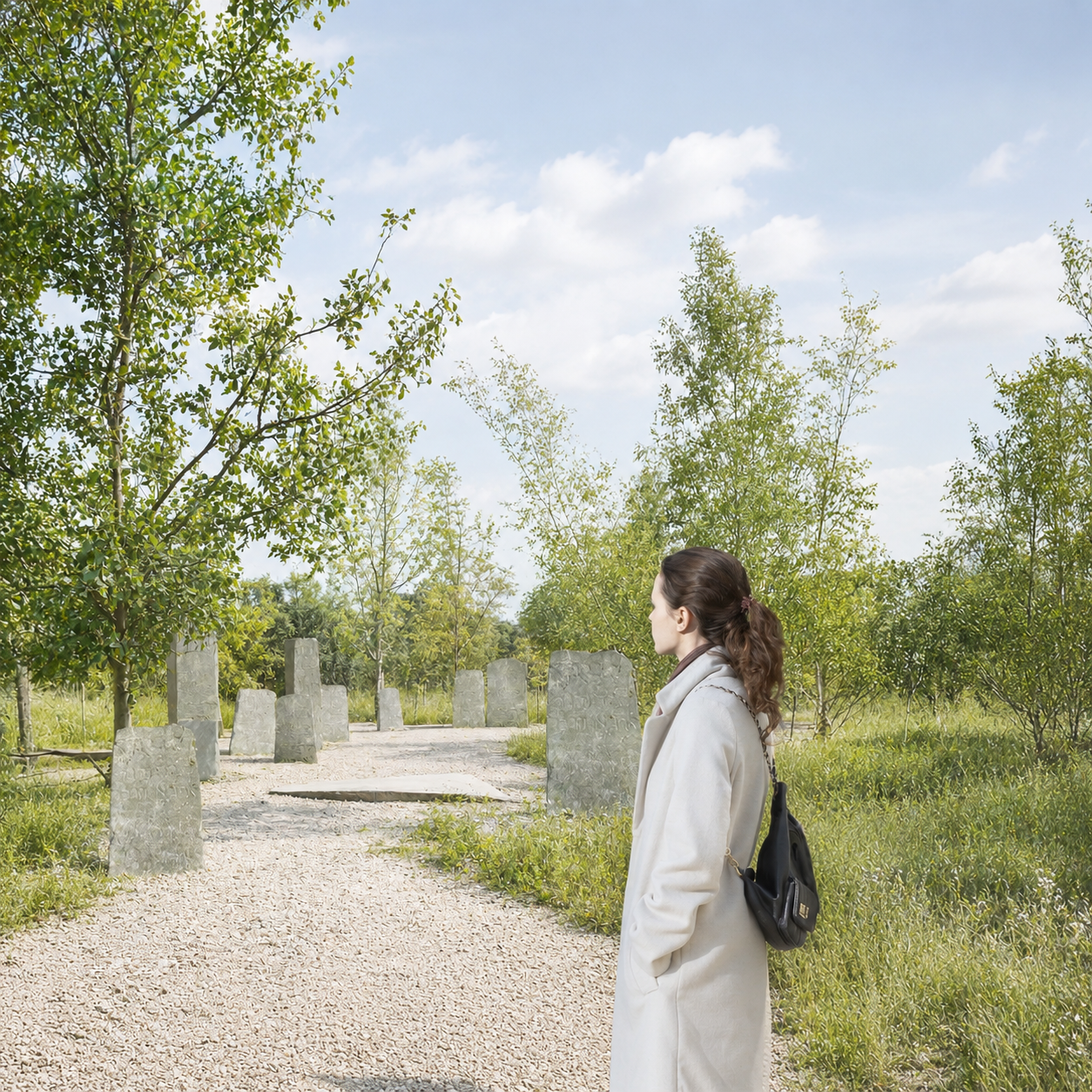
The Lapidarium is a place of remembrance, contemplation, and interpretation of the site's history. It is a memorial landscape where surviving matzevot and their fragments—whose original locations have been lost or can no longer be reliably identified—are carefully preserved. Set within the natural environment of the park, the gravestones create a landscape of memory that invites quiet reflection, the reading of inscriptions, and a deeper understanding of the history of the city's Jewish community.
Spatially, the Lapidarium is connected to the network of park paths while remaining separated from areas of active recreation. Crushed stone paving, natural materials, restrained planting, and the absence of excessive landscape amenities create an atmosphere of dignity, tranquillity, and respect.
At the heart of the Lapidarium stands the Stone of Memory, a commemorative marker that recounts the history of the cemetery and the loss of the site's Jewish heritage. Beyond serving as a place for the preservation of matzevot, the Lapidarium becomes a space where memory is restored, history regains its presence within the contemporary city, and a dialogue between the past and the present is sustained.
Landscape and Spatial Strategy
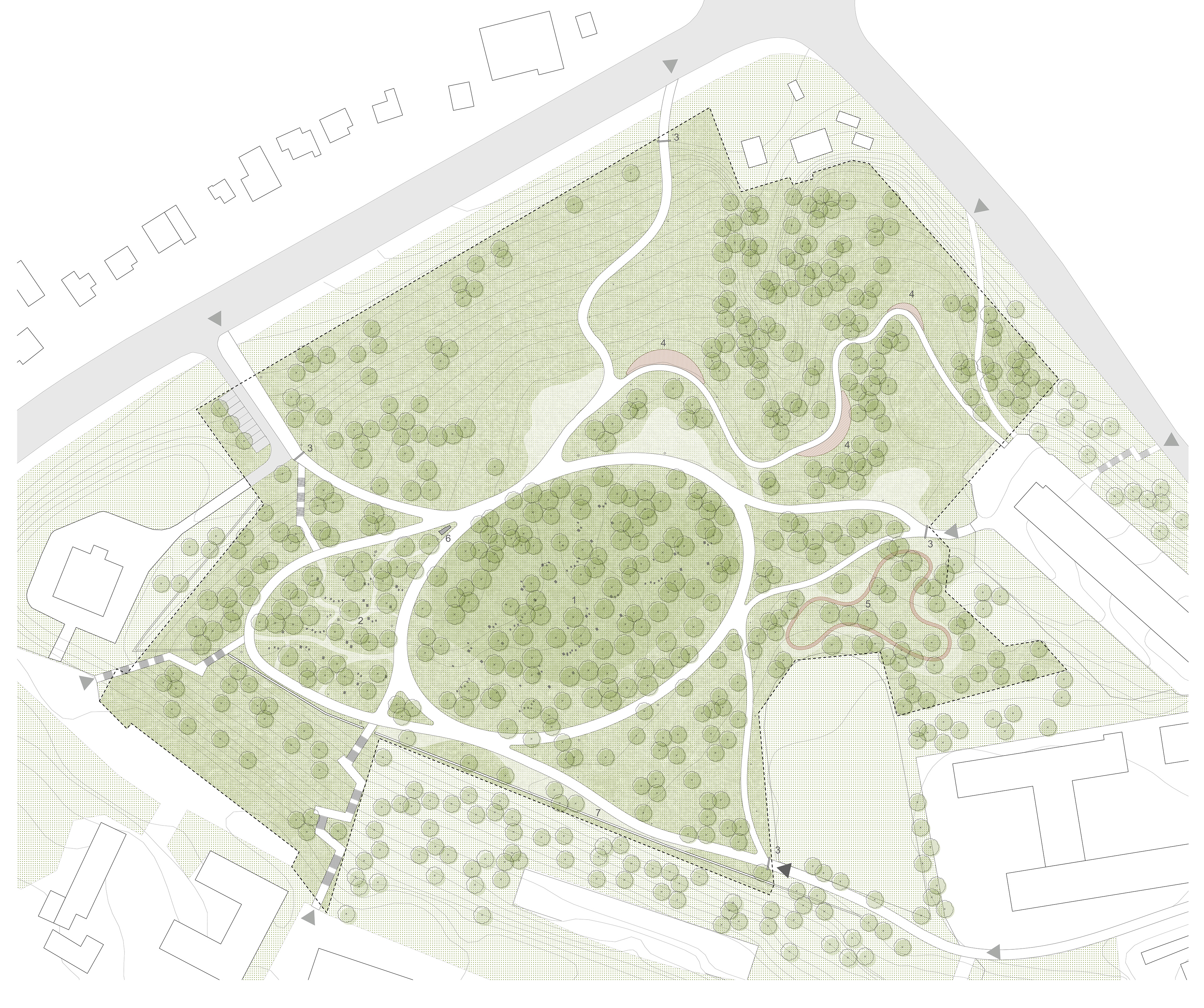
The site is organized into distinct functional zones with varying levels of intervention: the Space of Silence, the Lapidarium – Garden of Remembrance, a park promenade, and a sports and recreation area. The spatial structure responds to the existing topography, established circulation patterns, and key viewpoints. A central promenade forms the threshold between the memorial landscape and the park's active recreational areas.
Functional Zoning
The No-Dig Zone accommodates the Space of Silence—a contemplative area intentionally designed as a destination rather than a transit space. The park's main promenade skirts this zone without encouraging entry.
This area preserves the resting place of those buried at the cemetery. Historic matzevot remain exactly where they have survived, without relocation or disturbance. Interventions are limited to site cleaning, archaeological and historical documentation, mapping, and the conservation or restoration of gravestones in situ.
The Low-Impact Zone contains the Lapidarium – Garden of Remembrance, where displaced matzevot—previously scattered throughout the park, incorporated into pathways, or found in the ravine with no identifiable original location—are respectfully gathered.
Visitors are invited to enter this space for contemplation, learning, remembrance, and reflection. It functions both as a memorial landscape and as a place of historical interpretation.
At its centre stands the Stone of Remembrance, commemorating the history of the cemetery and inviting visitors to place a small stone in memory of those once buried here, following Jewish commemorative tradition.
The predominance of stone is reinforced through finely graded crushed-stone paving between the matzevot.
The Park Development Zone forms the recreational landscape, offering panoramic views over the city. It contains an expanded network of walking trails, mown meadow clearings, and simple timber seating integrated into the landscape.
Sports and Recreation Zone. The existing bicycle skills area is relocated to the sports and recreation zone adjacent to the school and its athletic facilities. Positioned lower within the park's topography and screened by denser vegetation, this location provides sufficient space for cycling activities while minimizing their impact on the memorial landscape.
Approach to Burial Areas and Matzevot
Within the Space of Silence (No-Dig Zone), the existing locations of burials and matzevot are preserved without excavation, relocation, or ground disturbance. Proposed interventions are limited to site clearance, research, documentation, mapping, and conservation.
Matzevot whose original locations have been lost are relocated to the Lapidarium – Garden of Remembrance, where they collectively form a memorial landscape dedicated to contemplation, historical interpretation, and remembrance.
Landscape and Ecology
The proposal prioritizes the preservation of the existing landform, avoiding extensive earthworks, grading, or slope modification. Pathways follow the site's natural topography and existing desire lines, minimizing physical intervention.
Permeable surfaces are used throughout the park. Main paths are finished with compacted fine crushed stone, while less frequently used areas within the Lapidarium employ a coarser, uncompacted aggregate.
The design intentionally preserves the site's predominantly wild and semi-natural character as a reflection of the passage of time.
Where necessary, individual trees are replanted only with native species already present on the site, replacing those reaching the end of their life cycle.
In areas adjacent to pathways, groundcover shrubs and perennial planting are introduced to stabilize degraded ground, reduce erosion, and improve ecological resilience. More remote areas remain unmanaged, preserving valuable native vegetation and minimizing unnecessary intervention.
urbanideas 2026