Conceptual Development of the Historic Krakidaly District in Lviv
Project: Urbanideas
Project location: Lviv, Ukraine
Design year: 2026
Project status: competition, winner
Project location: Lviv, Ukraine
Design year: 2026
Project status: competition, winner
Organizer: Department of architecture and urbanistic | Lviv City Council
Client: Department of architecture and urbanistic | Lviv City Council
Client: Department of architecture and urbanistic | Lviv City Council
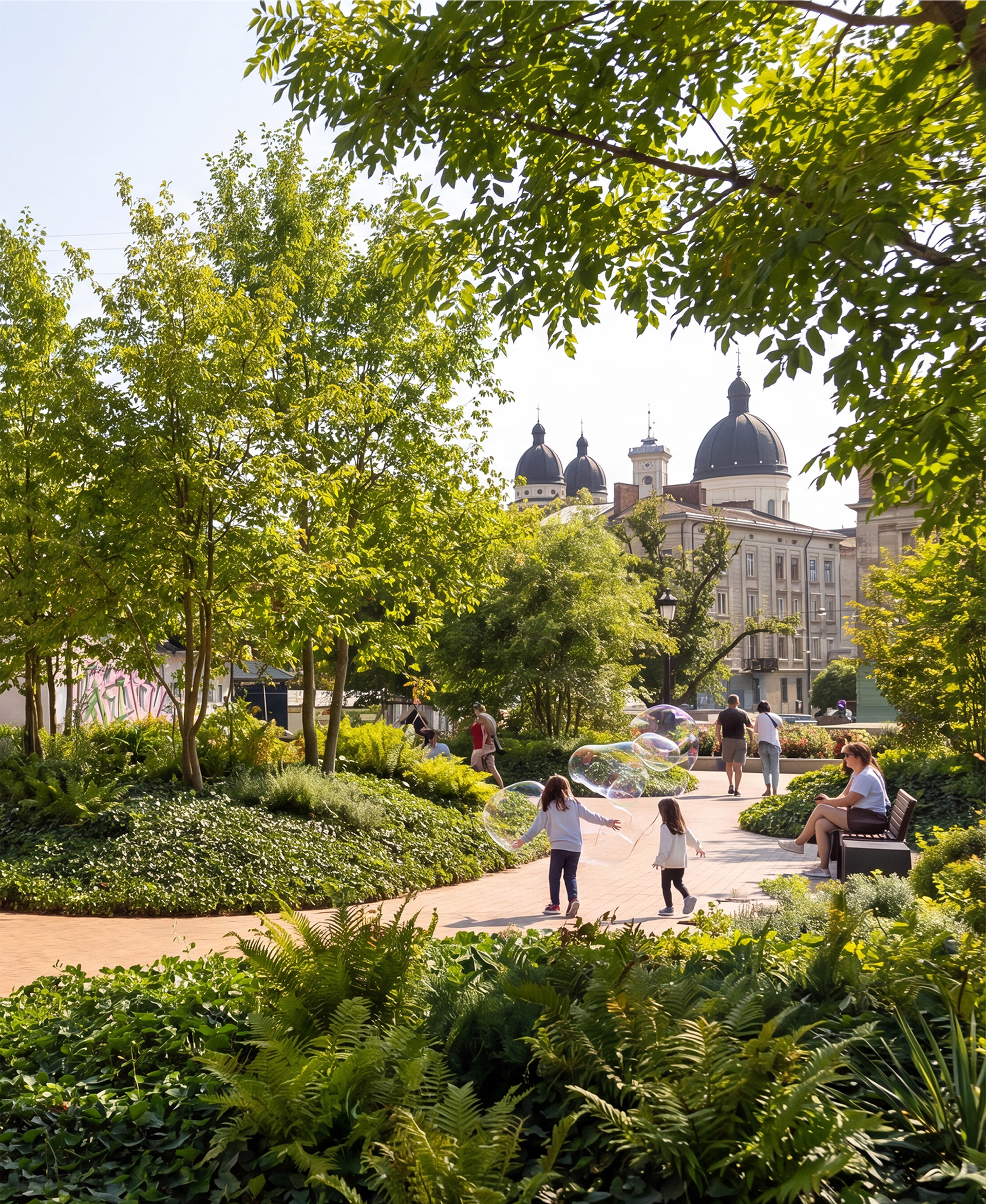
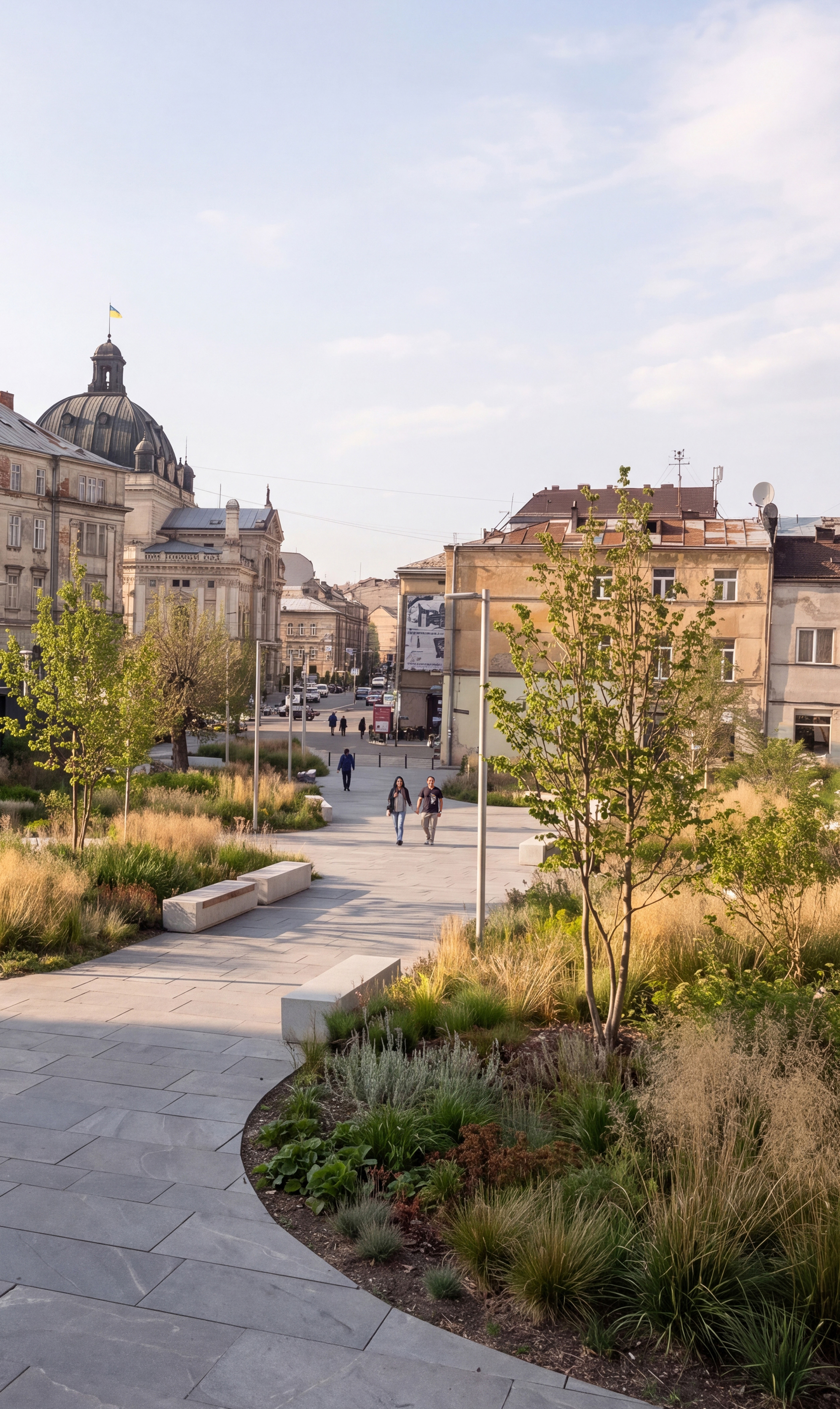
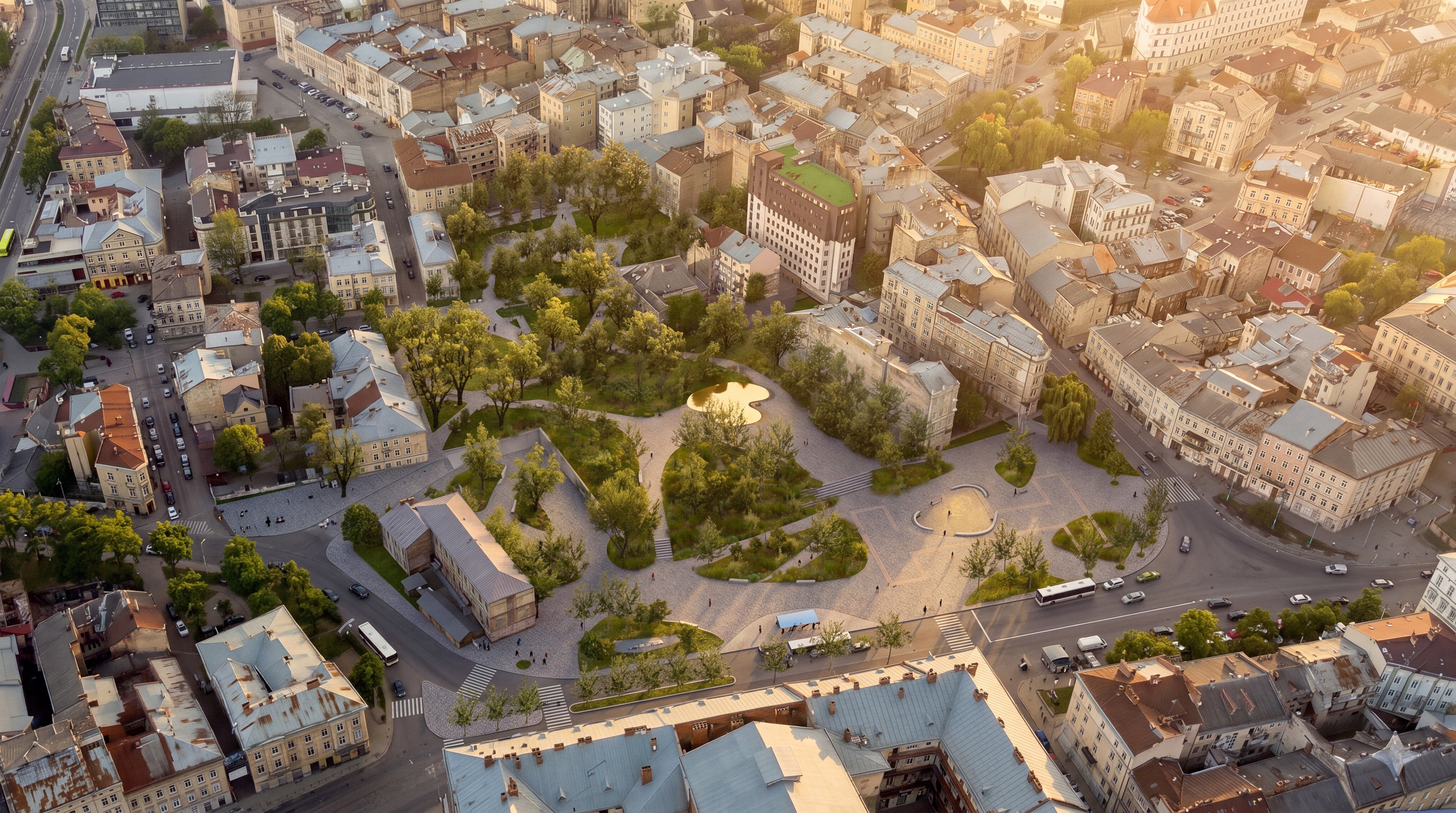
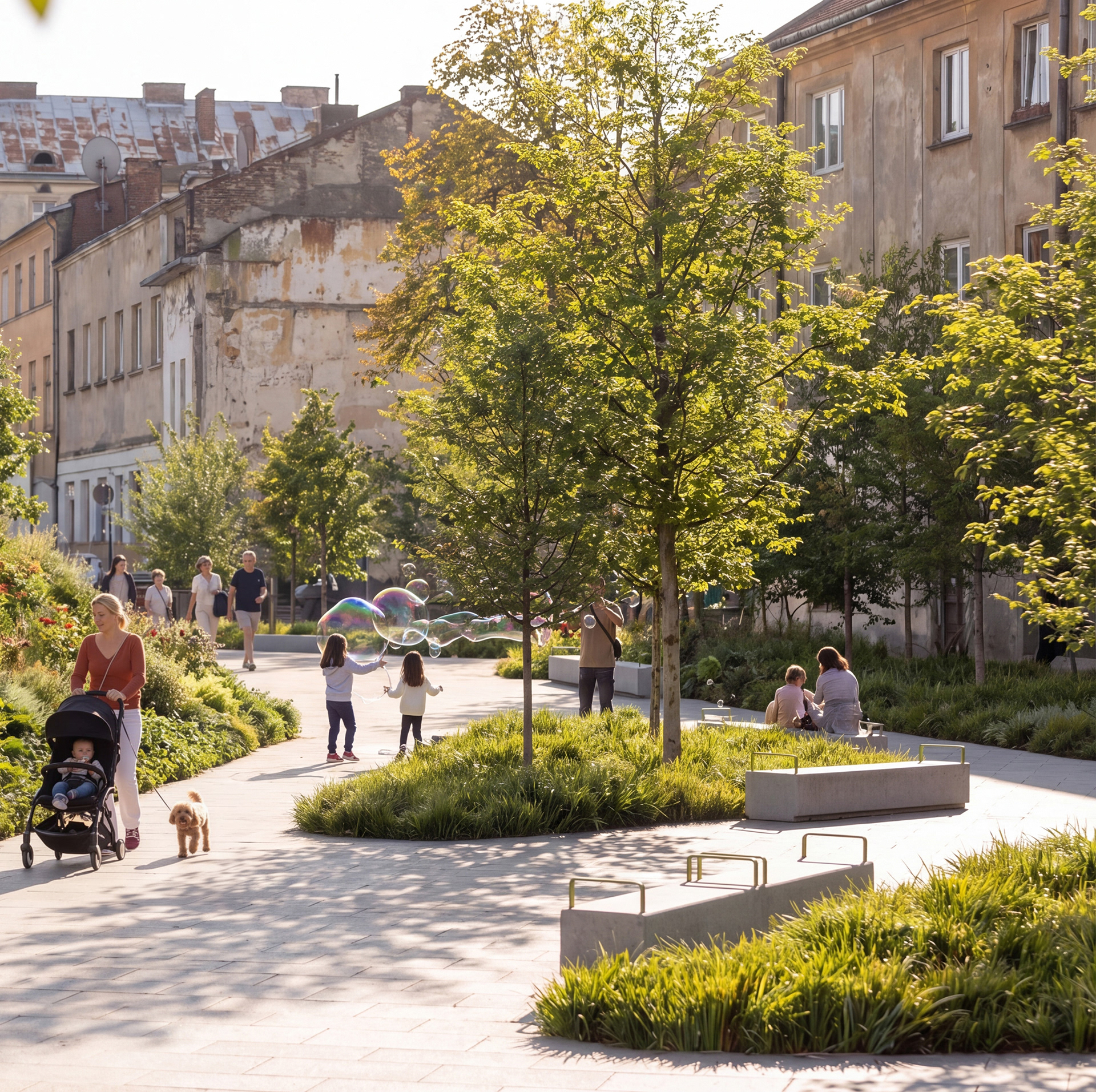
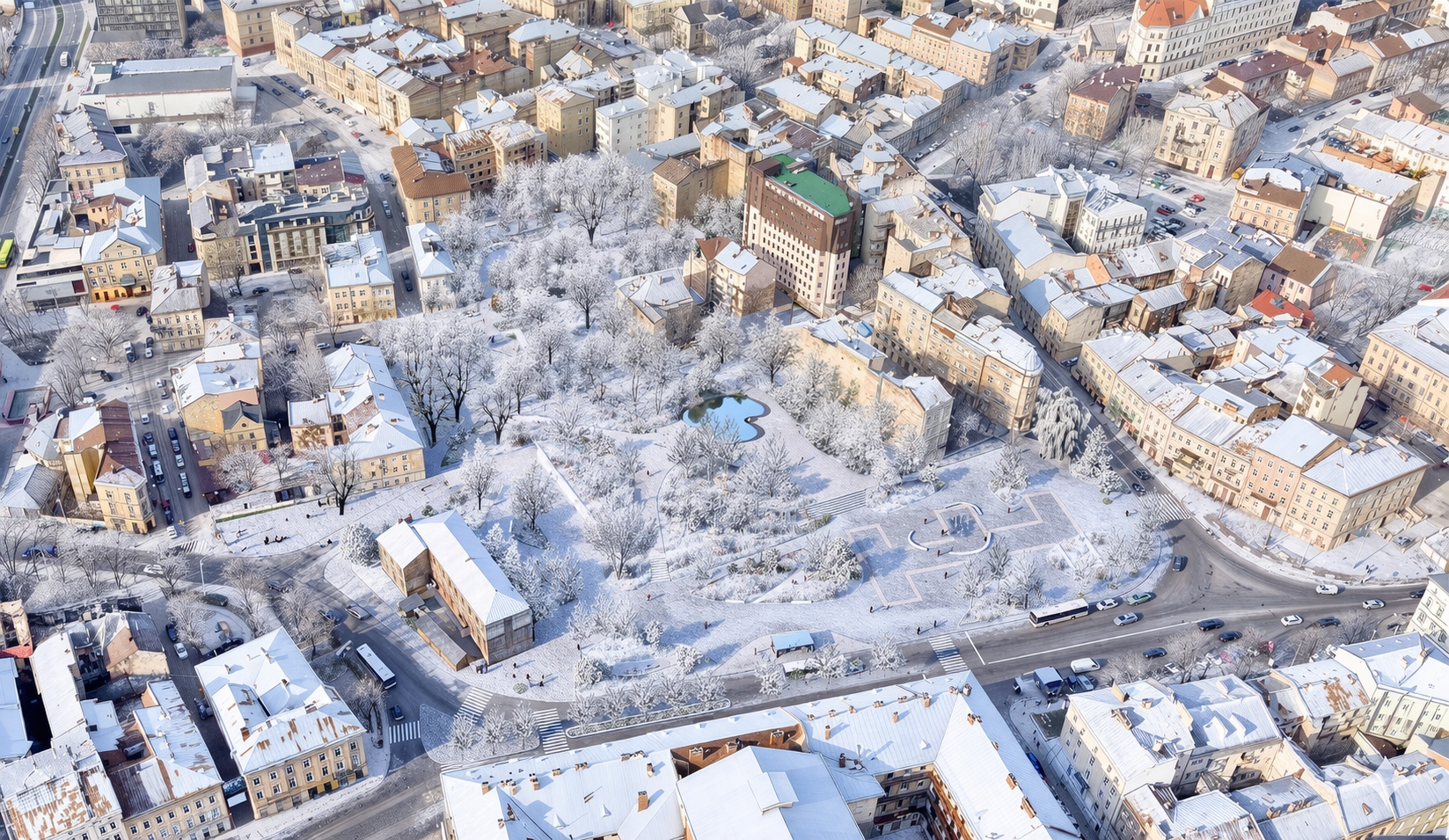
The concept for the revitalization of public spaces in the historic Krakidaly district is grounded in the principles of preserving the memory of place and respecting the existing urban fabric, prioritizing pedestrian movement, and enhancing the quality of urban space. The project proposes the pedestrianization of the area, a reduction in the dominance of vehicular traffic, and a strengthened role of greenery as a fundamental element of spatial organization. A key aspect is the preservation of existing vegetation, complemented by new planting.
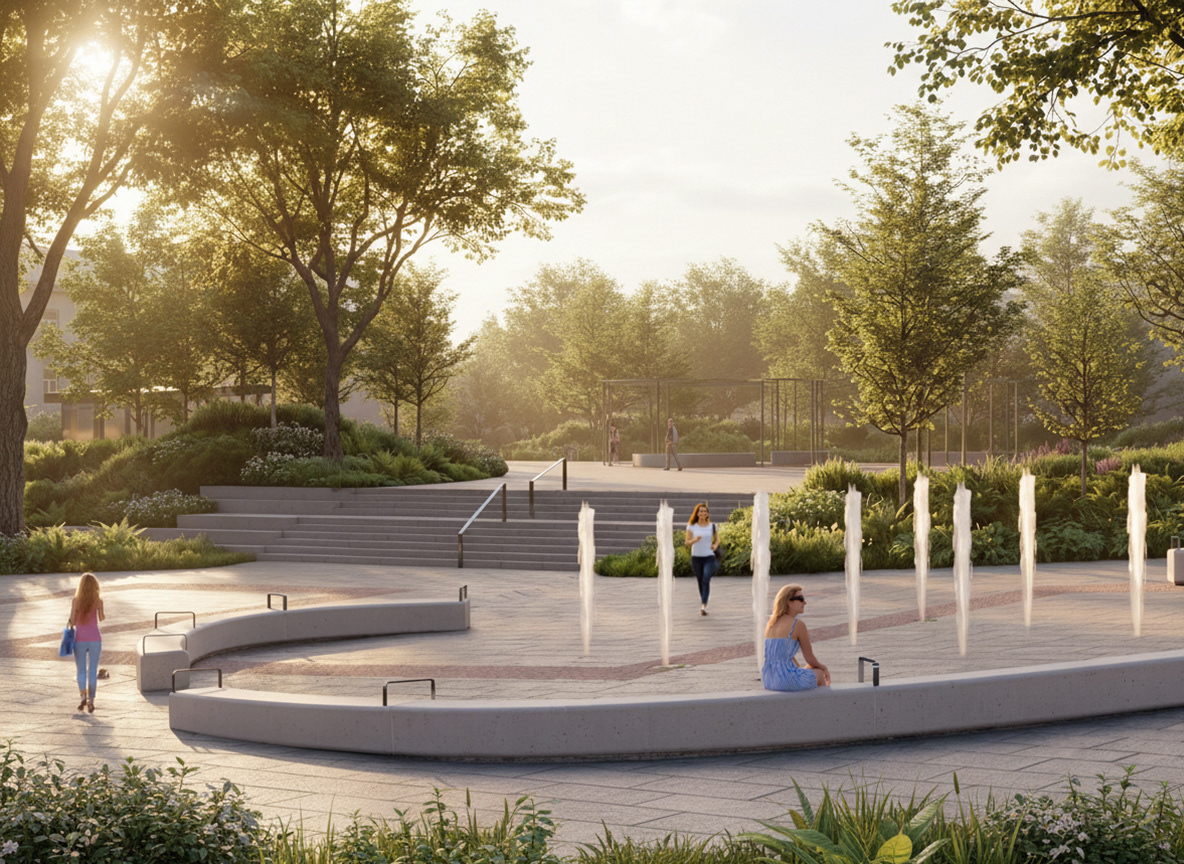
Within the first phase of implementation, the project envisions the creation of an urban square featuring an integrated interactive fountain, as well as the re-establishment of the footprint of the historic market pavilion as an element of place memory. Additional climate-responsive planting, seating elements, and lighting are also introduced.
The second phase предусматриває the creation of new green spaces, including a public garden on the roof of the Dobrobut market building, along with the revitalization of existing squares. Particular attention is given to reducing the extent of hard surfaces and optimizing the street profile through the reduction of on-street parking and narrowing of carriageways. These measures aim to limit through-traffic and enhance both the quality and continuity of the public realm.
In the proposed planning solutions, priority is given to resource-efficient approaches based on the principles of the three Rs: reduce, reuse, recycle. The design proposal emphasizes the maximum preservation of existing valuable elements of the environment, including current green spaces, the historical and spatial identity of the district, established recreational functions, and the active presence of regular users, particularly children.
A key objective is the adaptive reuse of existing structures with minimal demolition. Accordingly, the project proposes the rethinking of the existing concrete structure, allowing for the retention of its commercial function as well as its use as an underground urban parking facility. The building’s roof is seen as a valuable opportunity for the creation of a new public garden—an oasis of greenery and coolness within the dense urban fabric—offering distinctive and, at present, rather unexpected views of the surrounding historic architecture.
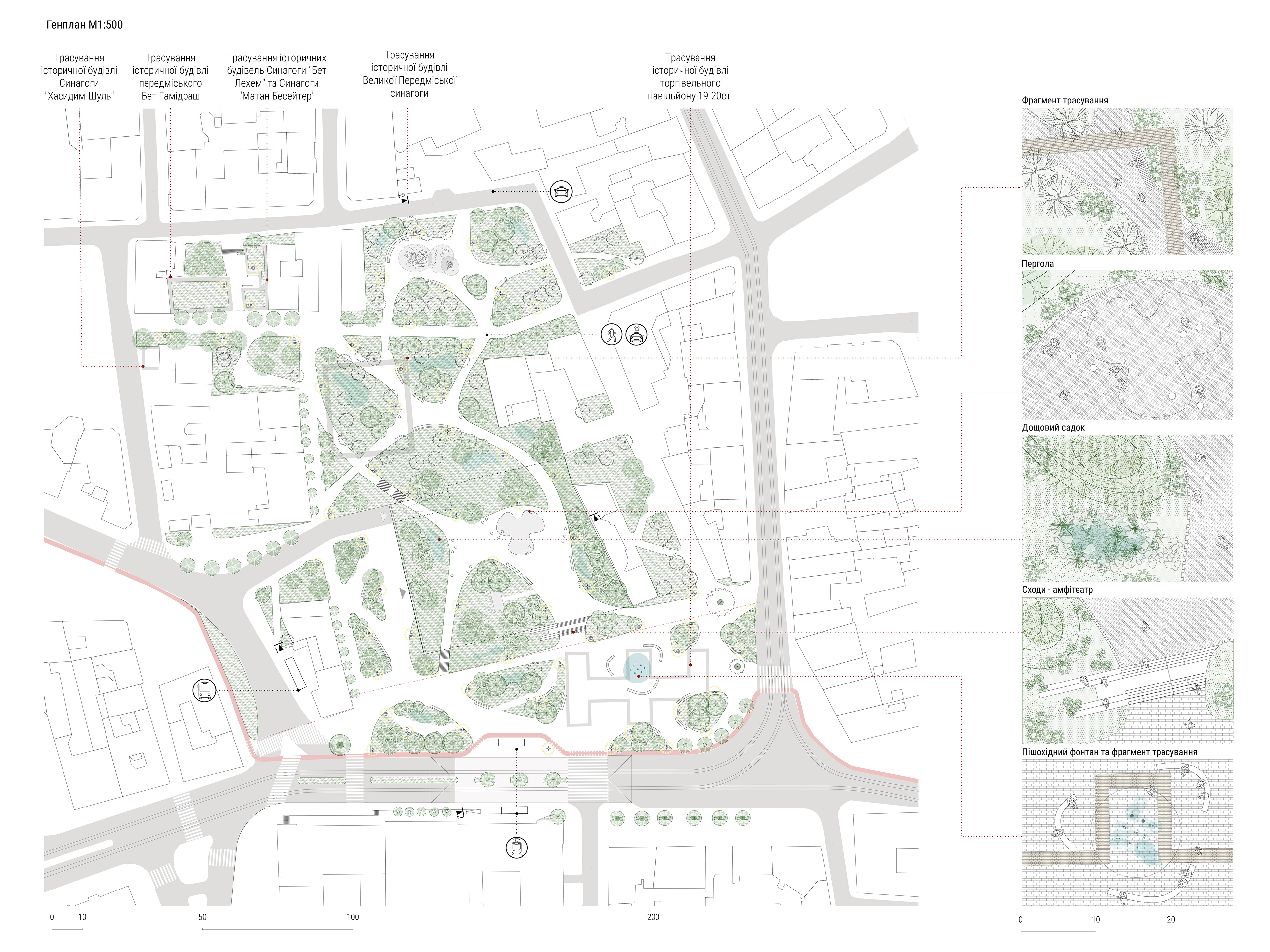
The historic buildings that once stood within these blocks are proposed to be marked by tracing their footprints at paving level and supplemented with informational signage.
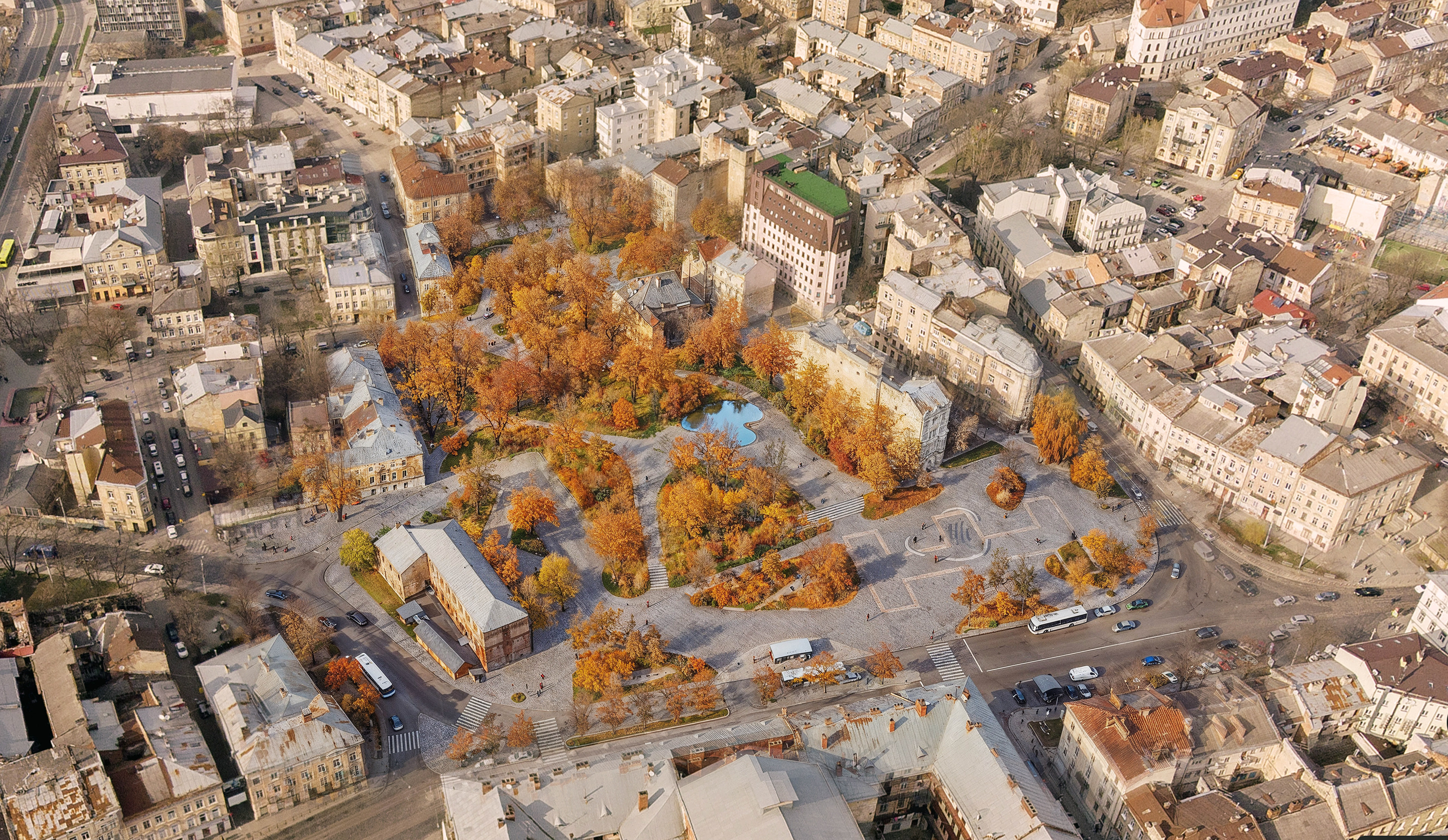
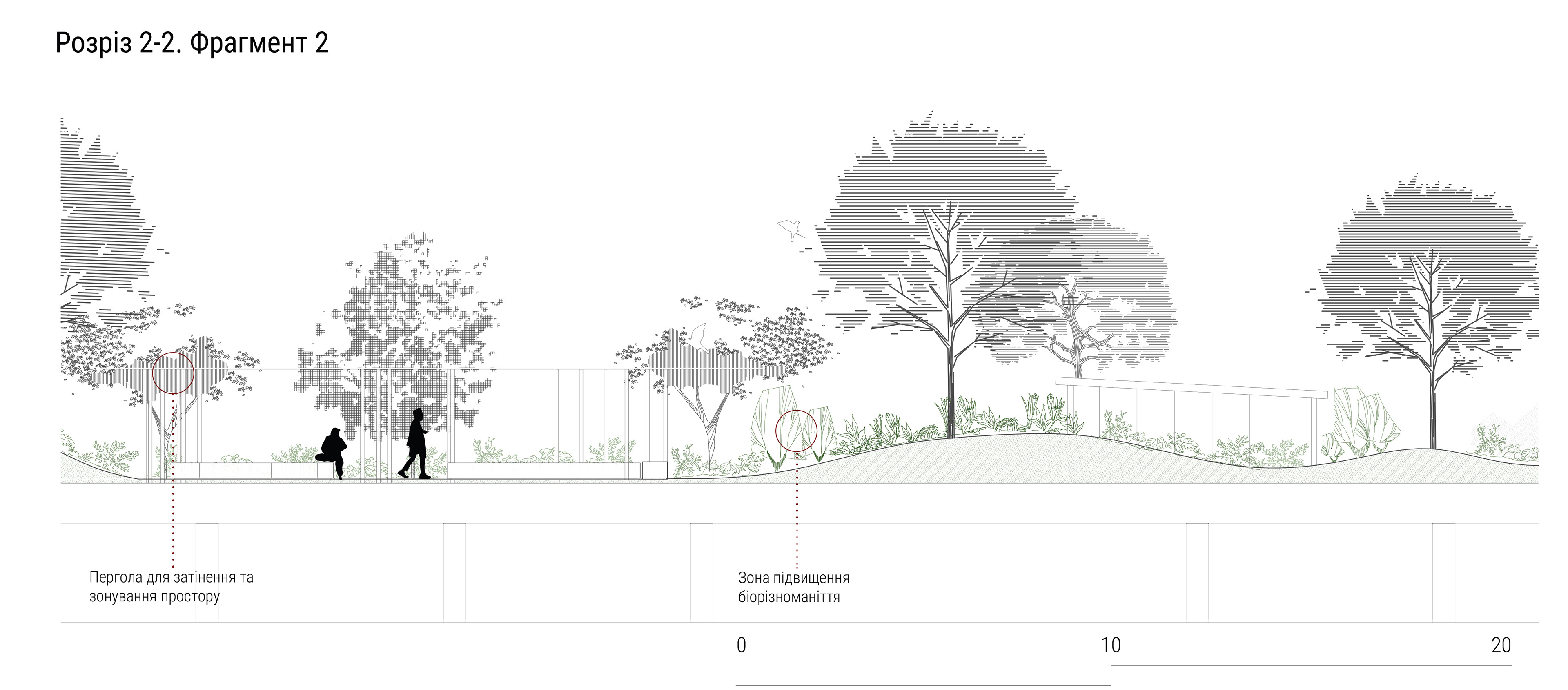
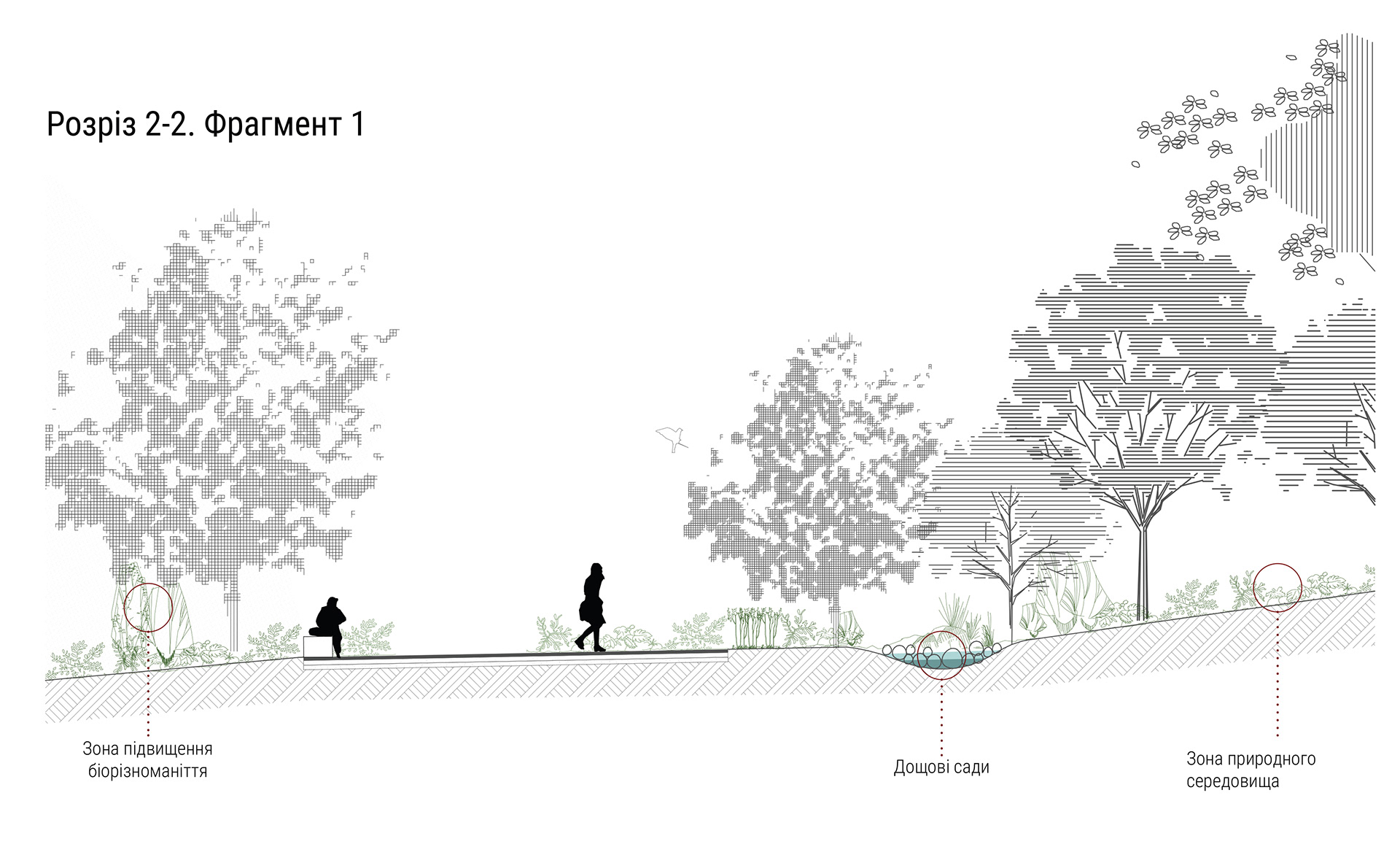
Nature-based solutions: The project envisages the use of permeable surface materials across all pedestrian areas of the green spaces, with screenings (gravel fines) prioritized and paving used along primary transit routes. Surface water management is achieved by directing slopes of paved areas toward green zones, where local depressions are designed to temporarily retain stormwater during intense rainfall. In this way, rain gardens are formed as elements of a sustainable stormwater management system.
The area of planted surfaces significantly exceeds that of hard покрытия, enabling them to function as natural infiltration systems. Green zones act as “sponges,” absorbing and gradually releasing moisture through infiltration and evaporation processes. This contributes to improved local microclimate, increased air humidity, and favorable conditions for vegetation growth.
urbanideas 2026